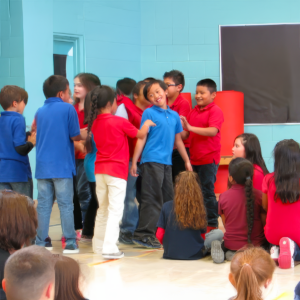
We’ve always encouraged children from an early age to have an affair with numbers. The best encouragement as always happens by live demonstration.
This is not talking about equations or computation for starters. That naturally follows. This is referring to the mind livening act of simply counting! Yes, just counting.
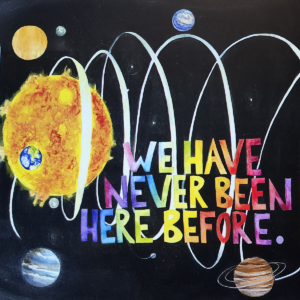
Numbers themselves are one of the universal languages… like music, color, pattern, movement… A rainbow is composed of seven colors no matter where you are in the world. Snowflakes are six-sided water crystals whether they fall. The four cardinal directions are universal orientation. There are 33 vertebrae in the human spine; 5 fingers on a hand; 2 hemispheres of the brain; 4 chambers in the heart… The number three represents triads, trinities, triumvirates, trilogies, triunes and triangles that have had great influence throughout human history. And the number one represents both the indivisible unit and the collective unity and wholeness for Hopis, Hawaiians and Hottentots alike.
Numbers have much to teach us. They represent and point to natural order and pattern. The first doorway to which begins with the beautiful act of counting!
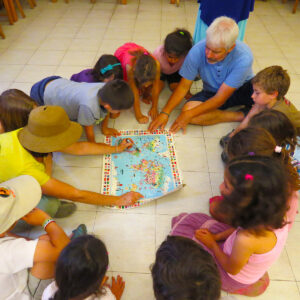
Children love to count (and be counted!) right from an early age: How many fingers? How many toes? How many ears, how many nose? How many this? How many thats? How many shoes? How many hats?
A young child loves to count – partly for the act of counting things together with others (very important); but also for the fascination with the ‘answer’ to the question: How many? We’ve seen many wide eyed children jump with joy when we all arrive at the final number of whatever it is we happen to be counting. Numbers seem to have charisma!
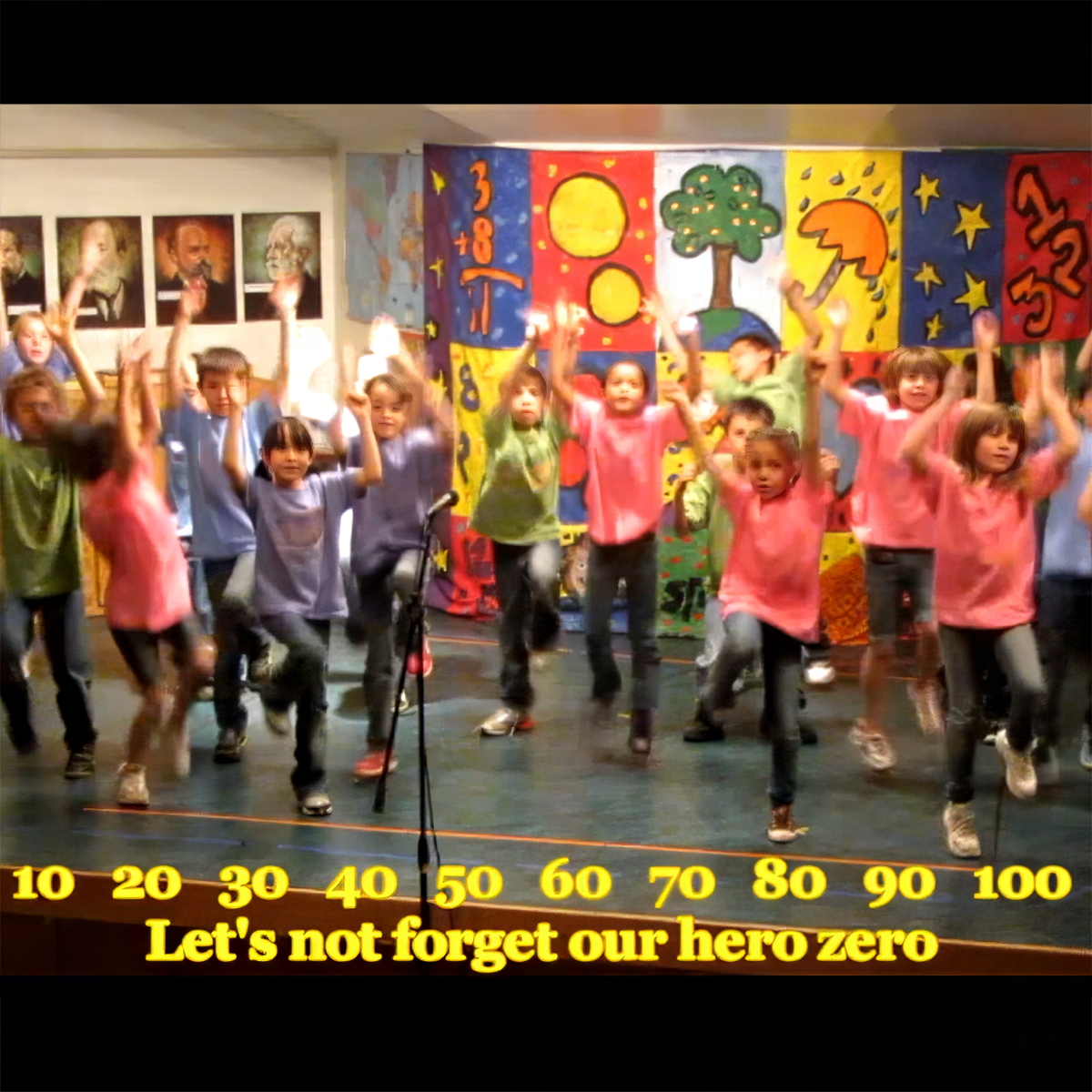
When children learn to count in sequences of ones, twos, threes, fives and tens (from as early on as they are so inclined), it forms neuro-pathways and patterning that serves as a versatile platform for both spatial and logical reasoning. This is exampled beautifully in the song Count On Us!
Now here’s where counting gets creative:
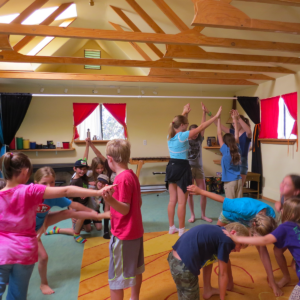
Make counting fun by adding movement and singing. This is the triad of Music, Math, and Kinesthetic Intelligences. Do simple movements at first, developing to more complex coordination exercises. This combines counting with movement, rhythm and meter, and the visual aspect of seeing each other moving and singing (along with graphic aids if you wish). Now you are tripling your learning power!
Mathematics in ‘western’ education is predominantly left-brain hemisphere guided. This arts integrated methodology involves both brain hemispheres firing in alternation and simultaneously. It simply involves more of the brain and more of the person! The results are extraordinary.
We have witnessed children who have been ‘brought up’ with arts integrated NUMBER LEARNING develop into advanced math minds able to express complex concepts with elegant simplicity. These are well-rounded learners interested in a wide array of subjects as well as being enthusiastic problem solvers.
Numbers are not hard things. People can make them hard or intimidating, but the nature of numbers is inviting, playful, multiple, engaging and fun!
Help to champion arts integrated education. Numbers can be vital pathways to natural education. Make numbers count!
~paz
*****
Quotes:
“Everything that can be counted does not necessarily count; everything that counts cannot necessarily be counted.” ~Albert Einstein
It’s not what you can do, but the way you do it that counts”. ~Mae West
*****