In the Barlovento region of Venezuela there is tiny village named Caño Negro. It was one of many villages founded by the West African people who had escaped from slavery into the jungle interior of the Venezuelan Amazon. Today, Barlovento is a vibrant and thriving region. The rhythms, stories, symbol and song of these proud people is African in origin, flavored by the nature of the Caribbean, the Amazon and the Spanish language…a robust fusion of potencies.
The typical villagers of Barlovento live in either mud-thatched huts or in concrete pre-fab boxes. Regional economy is based on cacao farming and raising beef. Both industries are highly exploitative, environmentally damaging and corrupt. It is a rough living, physically hard with very little relief or return.
The people of this region may be ‘poor’ by western standards, but they are rich in communal spirit! Here is a snapshot of how it was in the village of Caño Negro in 1981:
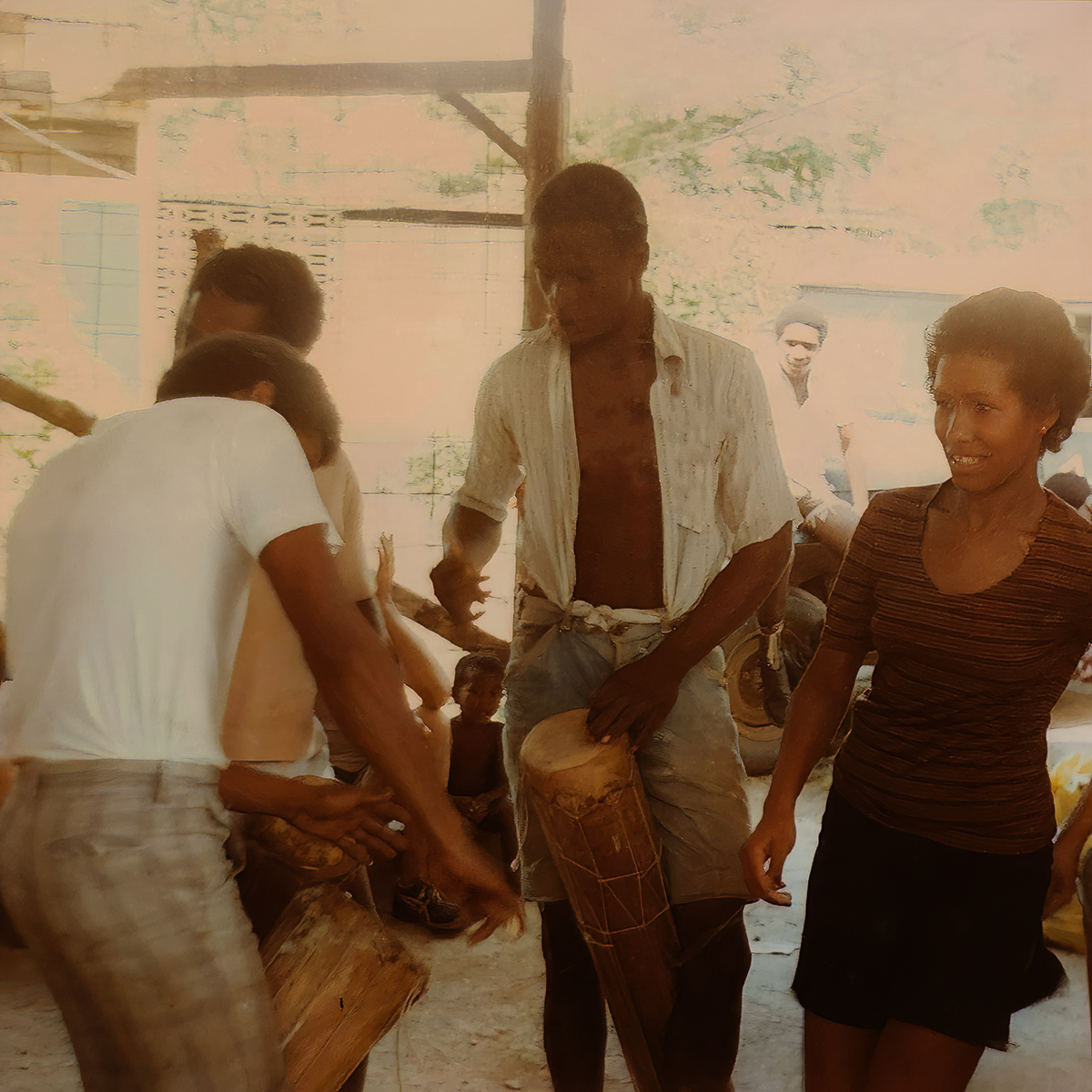
Every evening after sunset, when the heat of the day subsided, thousands of parrots returned to roost (always in pairs) and the symphony of night sounds washed over the jungle, the villagers would begin to gather by ones and twos in the plaza. This was their Center. They would gather around three drums – tres tamboras! Not just any three drums. These three drums had a specific function. The drummers would vary from night to night, but the drums themselves were always the same.
The largest drum would start with a steady bass beat. They called this the male drum (el varón). Then the second drum would come in playing syncopated counterpoint to the first drum. This drum was female (la hembra). The third drum called the neuter drum (el neutro), would start by weaving in and out of the male and female rhythms, blending, accenting, juxtaposing, balancing, stirring. It was incredible! You could not stand still. These drums would pick you up and move you. This was dance! And did these people know how to dance! Young and old, everyone was moving.
Then the most wonderful thing would happen. Someone, usually a woman, would start singing. It would be a well known chorus and everyone would immediately join in. Then she’d sing the first verse… but it was not practiced… it was made up on the spot, improvisedrhythmic rhyming verse. Then everyone would respond with the chorus. Then the next person would join in, singing a second verse and everyone would respond with an enthusiastic chorus. It would go on and on like this, sometimes up to an hour and then a new rhythm and song would arise.
Now the thing is – these verses were not random. They told a story. Sometimes the story was the news of the day. Sometimes it was teasing or humoring somebody whose ego was out of joint. Sometimes they were stories of defiance against ‘the company’ or the painful lament of abusive government. Sometimes the verses would tell the story of how two of the villagers fell in love, now forty years ago…
This was ‘the jungle drums’ the ‘village news’! Everyone benefited. Everyone would go home revitalized and refreshed. This was their center! It was how they got centered, so to speak. All around three drums, Los tres tamboras!
What are your tres tamboras?
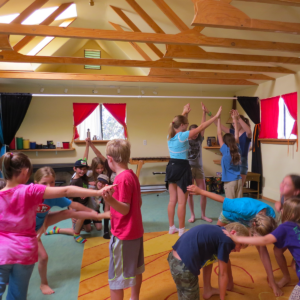
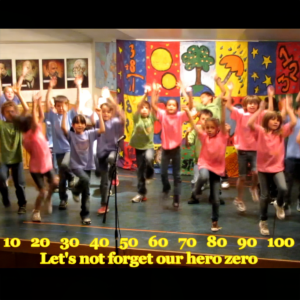
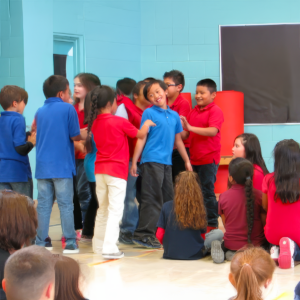
Perhaps the kitchen table is your family’s center. Perhaps meeting with your whole classroom around a book or a song or a rhythm and coordination exercise is your students’ center. Perhaps your center as an educator is reconnecting daily to the love of teaching. Whatever it happens to be, it is good to have one… We all need a center.
~paz
To enjoy the music of Barlovento, Venezuela go to Un Solo Pueblo on iTunes and imagine this music originating from the village centers of this lush tropical jungle region of South America